Are Banks Open Today? How to Check Bank Hours, Holidays, and Payment Delays Before You Go
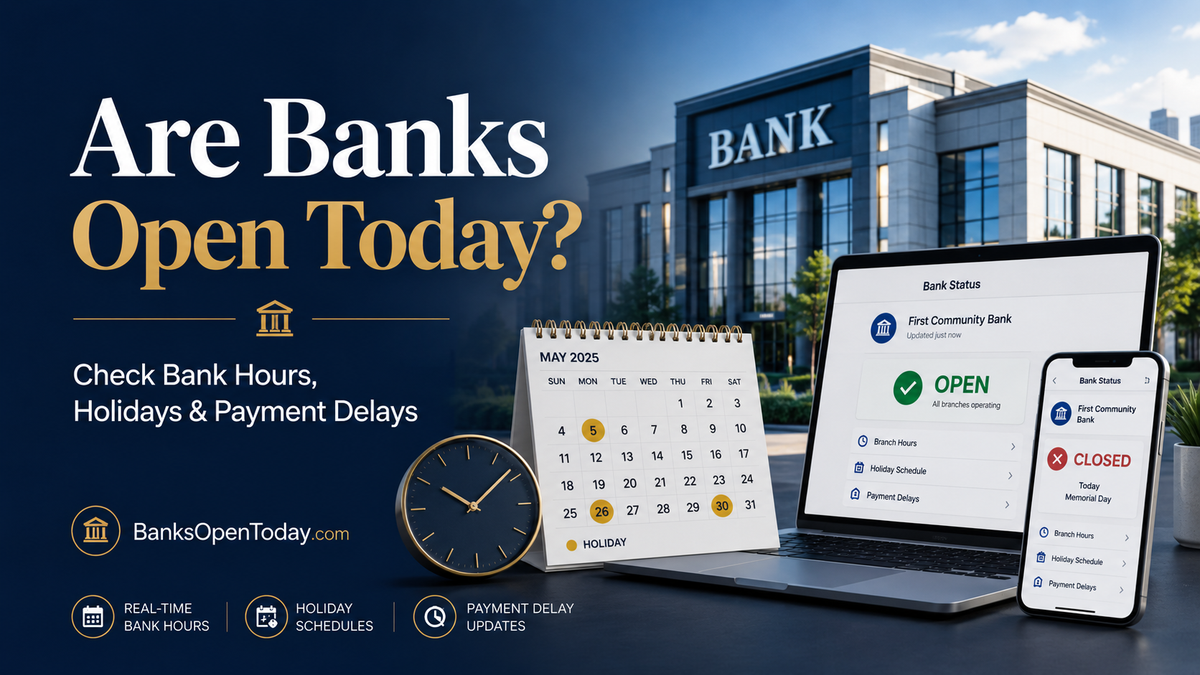
Every year, millions of people search the same simple question: are banks open today? It sounds like a basic question, but the answer is not always obvious. A bank may be open in one country and closed in another. It may be open in one city but closed in another region because of a local holiday. A branch may follow normal weekday hours, close early before a public holiday, or remain closed while digital banking continues to work.
This is exactly why checking bank hours before leaving home has become important. For many people, a bank visit is not casual. It may involve depositing cash, collecting a cheque book, resolving a card issue, making a business payment, signing loan documents, or completing a time-sensitive transaction. Reaching a branch only to find the doors closed can waste time, delay payments, and create avoidable stress.
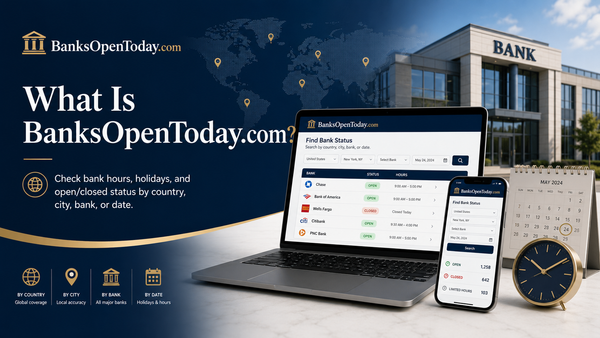
The safest approach is simple: before visiting a branch, confirm whether banks are open today in your country, city, and specific bank. A tool like check if banks are open today helps users quickly verify bank status by location and date instead of searching through multiple holiday calendars, bank notices, and government pages.
Why “Are Banks Open Today?” Is Not Always a Simple Question
Bank schedules depend on more than the day of the week. In many countries, banks generally operate from Monday to Friday, but there are exceptions. Some countries have Saturday banking. Some regions observe Friday or Saturday weekends. Some branches inside malls, airports, or business districts may follow different hours from standalone branches.
Public holidays add another layer of confusion. In the United States, most banks follow the Federal Reserve holiday calendar. The Federal Reserve lists official holidays such as New Year’s Day, Martin Luther King Jr. Day, Memorial Day, Juneteenth, Labor Day, Thanksgiving Day, and Christmas Day. For holidays falling on a Sunday, Federal Reserve offices close the following Monday; for Saturday holidays, Federal Reserve Banks and Branches may remain open the preceding Friday, while the Board of Governors is closed. (Federal Reserve)
In the United Kingdom, bank holidays vary across England and Wales, Scotland, and Northern Ireland. GOV.UK also explains that when a bank holiday falls on a weekend, a substitute weekday normally becomes the bank holiday. This means the “real” closure date may not always be the calendar date of the holiday itself. (GOV.UK)
In India, bank holidays are even more location-specific. The Reserve Bank of India holiday matrix shows that bank closures can vary by regional office and local observance, and it notes that scheduled and non-scheduled banks observe public holidays on second and fourth Saturdays. (Reserve Bank of India)
This is why a single global answer rarely works. “Banks are open today” may be true in Dubai, false in Mumbai, partly true in New York, and different again in London, depending on the date and region.
What Usually Determines Whether Banks Are Open Today?
Several factors decide whether a bank branch is open or closed.
The first factor is the weekly working schedule. In many countries, banks are open Monday through Friday. In some markets, selected branches may open on Saturdays. In other countries, weekend patterns may be different due to local workweek rules.
The second factor is the national holiday calendar. National holidays usually affect most banks across a country. Examples include Independence Day in the United States, Christmas Day in many countries, Eid holidays in Muslim-majority countries, and Republic Day or Independence Day in India.
The third factor is the regional holiday calendar. This is especially important in large countries with state-level or provincial observances. A bank in one state may be closed for a local festival while banks in another state continue operating.
The fourth factor is the bank’s own branch policy. Some banks close early before major holidays. Some branches have reduced hours during Ramadan, Christmas Eve, New Year’s Eve, or local emergencies. Branches in malls may follow mall timings, while corporate branches may close earlier.
The fifth factor is payment system availability. Even when online banking works, some transfers may not settle until the next business day if the national clearing system is closed.
Are Online Banking and ATMs Available When Banks Are Closed?
In most cases, yes. Online banking, mobile apps, debit cards, credit cards, and ATMs usually remain available even when physical branches are closed. However, “available” does not always mean every transaction will be processed immediately.
You may still be able to check your balance, transfer money between your own accounts, pay a bill, use your card, or withdraw cash. But transactions that require interbank settlement may be delayed. This can include ACH transfers, wire transfers, cheque clearing, payroll deposits, and some business payments.
The Federal Reserve Financial Services holiday schedule lists standard holiday schedules for services such as FedCash and FedACH. These systems matter because they support important parts of the U.S. banking infrastructure. (Federal Reserve Financial Services)
That is why bank holidays can affect more than branch access. A business owner waiting for a payment, an employee expecting payroll, or a customer trying to move money between banks may experience delays even if the banking app itself is working.
Why Bank Holidays Can Delay Payments
Many people assume that because banking is digital, all transactions should process instantly every day of the year. In reality, financial systems still depend on business-day rules, clearing windows, settlement systems, and national payment infrastructure.
For example, if a bank holiday falls on a Monday, a payment submitted late Friday may not fully process until Tuesday or Wednesday, depending on the payment type and the receiving bank. This is especially important for rent payments, payroll, supplier invoices, credit card payments, loan repayments, and international transfers.
In practical terms, the question is not only “are banks open today?” but also:
Will my payment clear today?
Will my cheque deposit process today?
Will payroll arrive before the holiday?
Will wire transfers be delayed?
Can I visit a branch for cash services?
Can I complete documents that require in-person verification?
These questions matter for individuals, freelancers, business owners, travelers, students, and anyone dealing with time-sensitive financial tasks.
Why Travelers Should Check Bank Hours Before a Trip
Travelers often face banking problems because they assume every country follows the same schedule. But bank hours can change dramatically from one place to another. A traveler may arrive in a new country during a national holiday, religious festival, or regional observance and discover that banks are closed for several days.
This can affect currency exchange, card issues, cash withdrawals, account verification, and emergency banking support. Even when ATMs are available, cash availability may become limited during long holidays or major travel periods.
For international travelers, it is smart to check banking availability before departure and again after arrival. This is especially important during Eid, Christmas, New Year, Easter, Diwali, Ramadan, national days, and long weekends.
A global bank status checker is useful because it helps users compare banking days across countries. BanksOpenToday.com currently presents bank-status information across many countries, banks, and cities, making it easier to check location-specific schedules from one place. (BanksOpenToday)
Why Business Owners Should Plan Around Bank Closures
For business owners, bank holidays can affect cash flow. A closed bank branch may delay cash deposits, cheque processing, supplier payments, payroll funding, and loan servicing. Retail businesses, restaurants, agencies, real estate firms, and import-export companies often rely on predictable banking operations.
A missed banking day can create a chain reaction. If a supplier payment is delayed, delivery may be delayed. If payroll is late, employee trust is affected. If a cheque deposit does not clear before a holiday, working capital may become tight.
That is why businesses should maintain a banking calendar and check upcoming closures at least one week in advance. This is especially important at the end of the month, near tax deadlines, before public holidays, and around financial year-end closing periods.
A smart routine is to check:
Today’s bank status
Tomorrow’s bank status
Upcoming bank holidays
Local branch hours
Payment processing cutoff times
Alternative digital banking options
This reduces last-minute pressure and helps businesses avoid unnecessary disruption.
Why Students, Workers, and Families Also Need Bank Status Information
Bank closures do not only affect businesses. Students may need to open an account, pay university fees, collect remittance, or resolve a card issue. Workers may need salary access, loan support, or document verification. Families may need to deposit cash, make urgent transfers, or handle mortgage and rent payments.
For people who depend on in-person banking, knowing whether banks are open today is a practical need. Not everyone can complete every task through an app. Some issues still require branch visits, signatures, identity verification, cash services, or direct support from bank staff.
This is why bank-hours content should not be written only for finance professionals. It serves everyday people who want a clear answer before making a trip.
How to Check If Banks Are Open Today
The most reliable way to check bank status is to combine three sources of information.
First, check the official public holiday calendar for your country or region. This tells you whether there is a national or regional holiday.
Second, check your bank’s official branch locator or notice page. This can confirm whether a specific branch has special hours, temporary closures, or reduced service.
Third, use a bank status checker to quickly see whether banks are generally open or closed for your selected country, city, bank, and date.
The benefit of using a dedicated tool is speed. Instead of searching “are banks open today,” then checking a government page, then searching your bank’s website, then confirming local branch hours, users can start with one simple check and then verify directly with the bank if the transaction is critical.
Common Situations When You Should Always Check First
You should always check bank status before visiting when:
It is a public holiday or the day before one.
It is a Monday after a weekend holiday.
It is the second or fourth Saturday in countries where those Saturdays are bank holidays.
It is during Ramadan, Eid, Christmas, Easter, Diwali, New Year, or national celebrations.
You need to make a large cash deposit.
You need a wire transfer or cheque clearing.
You are traveling internationally.
You are visiting a branch in a mall, airport, or business district.
You are dealing with a loan, mortgage, or legal document deadline.
A few seconds of checking can save hours of wasted travel and prevent missed financial deadlines.
Bank Open Today vs. Payment Processing Today
One important difference is branch availability versus payment processing.
A bank branch may be open, but some payments may still follow cutoff times. For example, a same-day transfer may need to be submitted before a specific hour. A cheque deposited late in the day may count as the next business day. A wire transfer may depend on the receiving bank and payment network.
The opposite can also happen. A branch may be closed, but digital banking may still allow limited transactions. You may be able to pay bills, transfer within the same bank, or use a card normally, even though branch staff are unavailable.
So when planning financial activity, ask two questions:
Is the branch open today?
Will my transaction process today?
This distinction is especially important during holidays and weekends.
The Future of Bank Status Search
Search behavior around banking is changing. People no longer want long explanations first. They want direct answers: open or closed, today or tomorrow, near me or in my city. That is why terms like “are banks open today,” “bank holiday today,” “is my bank open tomorrow,” and “banks open near me” continue to be valuable search opportunities.
The best content for this topic should not simply list holidays. It should solve the user’s real problem: uncertainty. A strong bank-status page should explain the reason for closures, show the next working day, mention digital banking availability, and guide users to verify branch-specific details when needed.
That is where tools like BanksOpenToday.com can become useful. They turn a confusing search into a quick decision: go now, wait until tomorrow, use digital banking, or contact the bank directly.
Final Thoughts
The question “are banks open today?” matters because banking still affects real-life deadlines. People need to deposit money, receive payments, clear cheques, visit branches, sign documents, and plan around holidays. A wrong assumption can cost time, money, and peace of mind.
Because bank schedules vary by country, region, holiday, branch type, and payment system, the best approach is to check before you go. Use official calendars, confirm with your bank when the transaction is important, and rely on tools that simplify bank-status checking by date and location.
Before making your next bank visit, take a moment to confirm whether your bank is actually open today. It is a small step that can save a wasted trip and help you plan your financial day with confidence.